
When Mail to or from Bolduc Is Flagged: what the MDOC does and what you may be told
If a letter to or from Bolduc raises "reasonable suspicion," MDOC policy allows staff to pull it from the normal mail flow immediately and hand it to facility law enforcement for review. That can mean delays, non-delivery, and—sometimes—very little information about what's actually happening.

Mail to or from Bolduc can be flagged when staff have reasonable suspicion it involves contraband, criminal activity information, a facility rule violation, or communication with a prohibited correspondent. When that suspicion exists, MDOC policy requires the mail - envelope and everything inside - to be turned over immediately to a facility law enforcement officer. Not every mail problem involves criminal concerns. Some issues are simpler but still cause delays or non-delivery. Bolduc requires incoming general correspondence to be on 8½" x 11" white paper, written or printed in black or dark blue ink. Incoming resident mail must also include a verifiable recipient name and return address. Cash is never allowed - if you put cash in an envelope, don't expect it to arrive. Wondering why something didn't get through? Start with the basics. A missing return address, an unverifiable name, cash in the envelope, or wrong paper and ink are common, fixable mistakes that can stop mail before it ever reaches the resident.
Key point: If staff have reasonable suspicion about contraband, criminal information, rule violations, or a prohibited correspondent, the envelope and its contents are immediately turned over to a facility law enforcement officer.
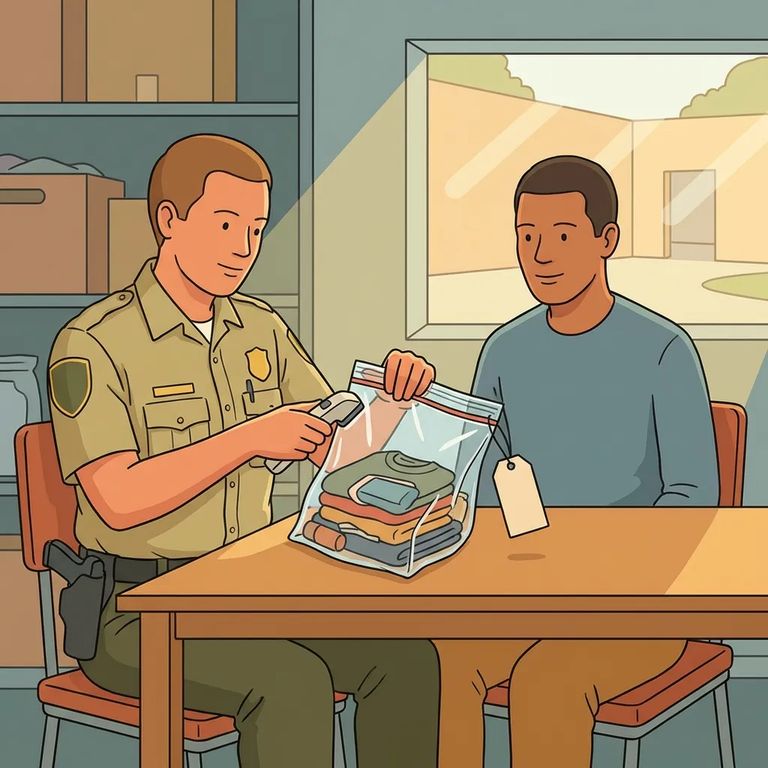
Once mail is turned over, a facility law enforcement officer secures it for review or investigation. Depending on what's found, that mail may also be held as potential evidence - either for prison disciplinary proceedings or for court.
- Secure the mail - the facility law enforcement officer takes custody of the envelope and contents so it’s not handled like routine correspondence.
- Review and/or investigate - the mail is examined as needed to address the suspected contraband, criminal information, rule violation, or other security concern.
- Hold it as evidence when applicable - if the situation calls for it, the mail may be kept for possible use in disciplinary action or court proceedings.
If mail is secured, the default rule is straightforward: the prisoner gets prompt written notice explaining what happened and why the item wasn't delivered. But there's an important exception. If the mail involves information or contraband tied to criminal activity (including juvenile offenses), or if it relates to violations involving a court order or conditions of bail or conditional release, the prisoner won't be notified unless a prosecuting attorney approves it first. Translation: when staff treat the mail as part of a potential criminal matter, the usual "prompt written notice" timeline goes out the window.
Notice can be delayed: When mail relates to criminal activity or certain court/bail/conditional-release issues, MDOC policy requires prosecuting attorney approval before the prisoner is notified.
4
- ✓ Double-check the envelope has a verifiable recipient name and a clear return address.
- ✓ Make sure your letter is on 8½" x 11" white paper.
- ✓ Use black or dark blue ink (written or printed).
- ✓ Never send cash to a resident.
- ✓ Keep your own record of what you sent (a photo or copy of the letter) and when you sent it, in case the mail ends up secured for review or investigation.
- Confirm the mail met Bolduc’s basic requirements - verify the name and return address were included, the letter was on 8½" x 11" white paper, and it was written/printed in black or dark blue ink. If you included cash, assume that’s the problem.
- Gather your timeline and copies - write down the date you mailed it and keep any copy/photo of what you sent. If the mail was secured, it may be handled as part of a review/investigation and potentially as evidence.
- Ask what you can, and be specific - when you contact the facility or MDOC for clarification, ask whether the mail was stopped for a formatting/requirement issue versus being secured for review or investigation.
- Understand the notification limits - if your loved one hasn’t received a prompt written notice, it may be because the mail is being treated as related to criminal activity or certain court/bail/conditional-release issues, where prosecuting attorney approval controls whether notification happens.
Realistic expectation: If mail is being reviewed as potential evidence, you probably won't get an immediate explanation. The prisoner may not be notified right away either - especially if prosecuting attorney approval is required.
Find an Inmate at Bolduc Corrections Facility, ME
Search for a loved one and send messages and photos in minutes.