
What 'Confidential' or 'Legal Mail' means and exactly how to mark it
Sending sensitive paperwork to someone at Davis Correctional Facility? The outside of your envelope matters. CoreCivic treats
Under CoreCivic policy, “special correspondents” are specific categories of people and offices that an inmate/resident is allowed to send and receive confidential correspondence with. The list includes state and federal elected officials, certain state and federal appointed officials, judges and courts, and attorneys who can be verified as licensed to practice law in any state. It also includes government officials responsible for someone’s custody, parole, or probation supervision, county agencies involved in child custody proceedings, officials of a foreign consulate, and certain legal and civil liberties organizations.
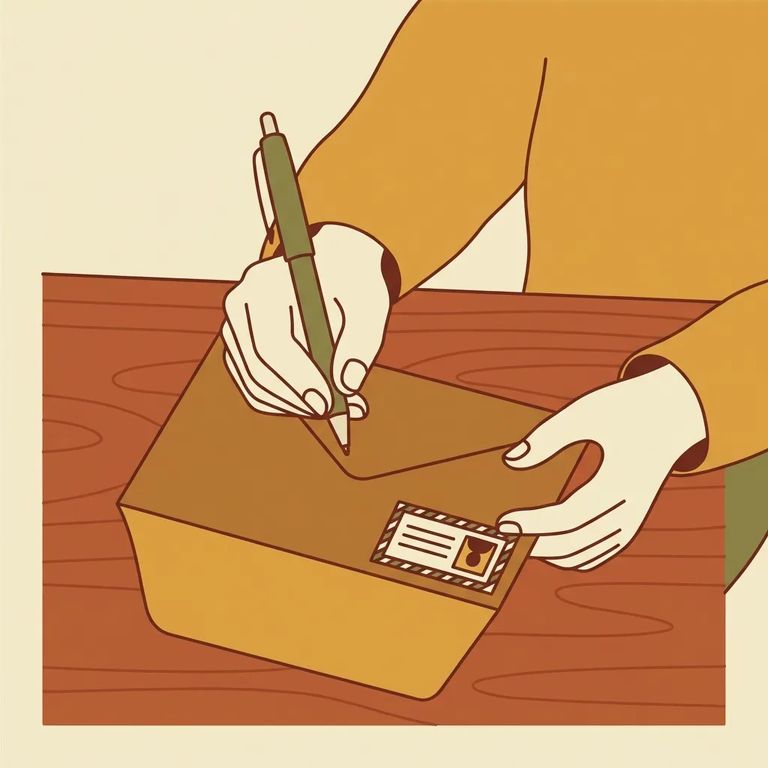
For incoming special correspondence to be handled as confidential, the envelope should be clearly marked: “Confidential/Legal Mail.” That exact marking is what signals staff that the letter is intended to be treated as special correspondence rather than regular personal mail.
The marking by itself isn’t enough. The envelope also has to show the sender’s name and official title so it can be identified as coming from someone who qualifies as a special correspondent. If the sender can’t be identified as an approved special correspondent based on what’s on the outside of the envelope, the facility can treat it as general correspondence instead of confidential/legal mail.
Regular (non-special) mail does not get confidential handling. Under the policy, all incoming general correspondence is subject to being read - either in part or in full - and searched for contraband before it’s delivered to the inmate/resident. That’s the baseline rule for ordinary personal mail.
Confidential/legal mail is different, but only when it’s properly identified. Incoming special correspondence should be marked “Confidential/Legal Mail,” and it must bear the name and title of a sender who is considered “special” under the policy. When it’s recognized as special correspondence, it may be opened and inspected in the presence of the inmate/resident it’s addressed to - rather than handled the same way as general mail.
Note: If the envelope can’t be identified as “Confidential/Legal Mail” from an approved special correspondent, it can be treated as general correspondence - which is subject to being read and searched before delivery.
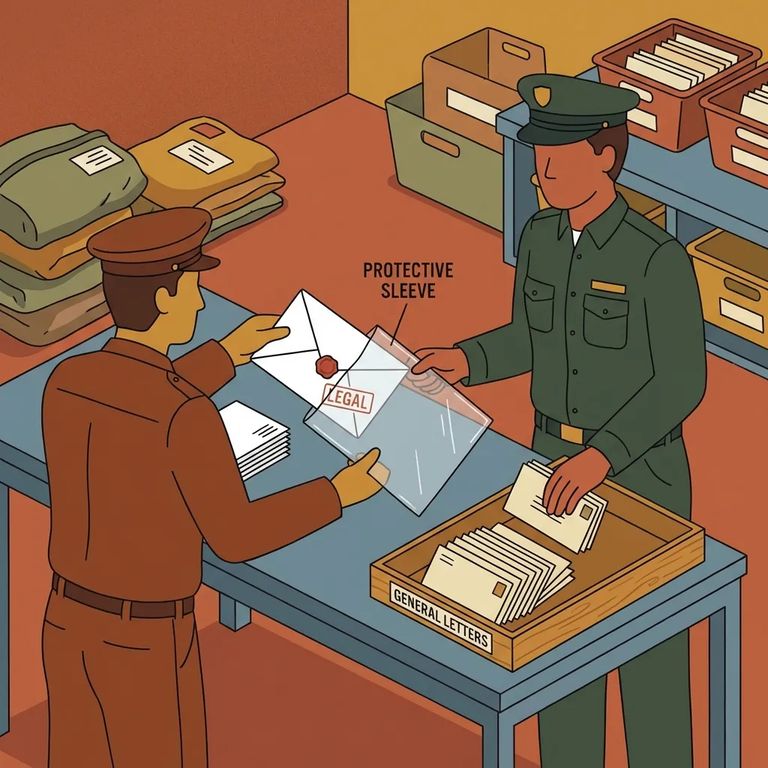
If special correspondence is opened by mistake, the policy spells out what staff must do. The correspondence will not be read, and it must be immediately resealed. The employee who opened it has to mark the envelope “opened in error,” then sign and date it. The facility also maintains a log to document each time special correspondence is opened in error, and any portions that don’t contain prohibited correspondence/items will still be delivered to the addressee.
- Do not read the contents - if special correspondence is opened in error, it must not be read.
- Reseal it immediately - the correspondence should be closed back up right away.
- Mark the envelope “opened in error” - this note must be written on the envelope.
- Sign and date the envelope - the employee who opened it must add their signature and the date.
- Record it in the error log - a log is maintained to document all special correspondence opened in error.
- Deliver allowable contents - any portions that don’t contain prohibited correspondence/items are delivered to the addressee.

Practical Tips
- ✓ Use special-correspondent channels only if the sender fits an approved category (for example, an attorney licensed in any state, a court, or specified public officials).
- ✓ Write “Confidential/Legal Mail” clearly on the outside of the envelope.
- ✓ Include the sender’s name and official title on the envelope so staff can identify it as special correspondence.
- ✓ If it isn’t identifiable as special correspondence, expect it to be treated as general mail - which can be read (in part or in full) and searched before delivery.
Find an Inmate at Davis Correctional Facility, OK
Search for a loved one and send messages and photos in minutes.