
What Happens to Your Loved One's Property When They're Transferred from Douglas County Jail
Transfers happen fast, and property is one of the first things families worry about. Here's how Douglas County Jail handles belongings during transport, what won't go with your loved one, and how to keep items from being tossed or destroyed.
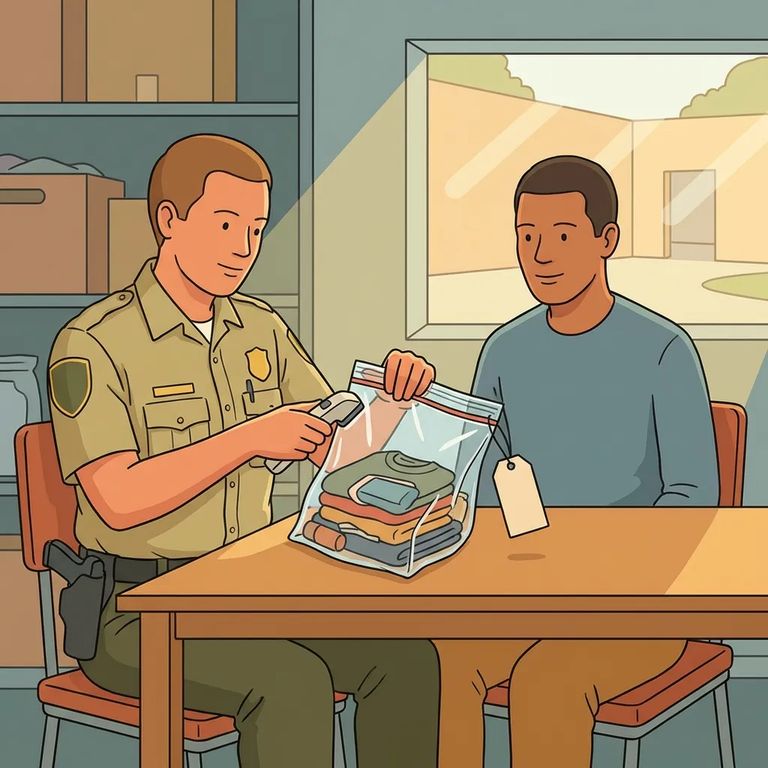
Not everything goes with an AIC during transport. Douglas County Jail won't send commissary items, knives, or anything that could be used as a weapon. If your loved one has any of these, they'll need to arrange for pickup separately - don't expect these items to follow them to the next facility.
Commissary context: AICs at Douglas County Jail can receive up to $50 in commissary products, ordered through Access Corrections. If your loved one transfers before their order arrives, that commissary becomes a separate property issue to deal with.
Douglas County Jail enforces a strict size limit for transport. An AIC can only bring personal property that fits in a 10 x 14-inch property bag. That's not much - even if they had more items stored at the jail, only what fits in that bag goes with them.
- ✓ Have it picked up - excess property that won’t fit in the 10 x 14-inch bag can be picked up by family or an agent.
- ✓ Have it shipped - excess property can be shipped by mail at the AIC’s expense.
- ✓ Understand it may be discarded - if it isn’t picked up or shipped, excess property may be thrown away.
Tip: A 10 x 14-inch bag is small. If your loved one has more than that in property, arrange pickup or shipping right away - extra items can end up in the trash.
Timing matters. Douglas County Jail destroys any property left behind for more than 30 days. If your loved one transfers and leaves items behind, treat retrieval as urgent. Waiting too long means losing the property for good.
Act fast: Property left at the facility for more than 30 days can be destroyed.
Commissary gets tricky around transfers because it doesn't travel with the AIC. The pickup window is tight: if your loved one leaves before commissary is distributed, they have 48 hours from delivery to pick it up. After that, it's disposed of. And since commissary items (along with knives or potential weapons) aren't sent on transport, anything that arrives after they're gone needs to be handled quickly through the property process.
If your loved one needs someone else to pick up their items after transport, they'll likely need to complete a property release form authorizing that person. Before you show up to collect anything, make sure the jail has whatever authorization they require on file.

- Confirm a transfer is happening - once an AIC is transported, only a small amount of property (up to a 10 x 14-inch bag) can go with them, and some items won’t go at all.
- Assume there will be “excess” property - anything beyond the 10 x 14-inch bag has to be picked up, shipped by mail at the AIC’s expense, or it may be thrown away.
- Choose a plan quickly (pickup or shipping) - don’t wait to decide; the longer property sits, the more likely it is to be lost.
- Work within the 30-day window - Douglas County Jail states that property left over 30 days will be destroyed.
Reminder: Can't pick up property in person? Ask about shipping it at the AIC's expense. Otherwise, excess items may be thrown away - and anything left over 30 days can be destroyed.
Find an Inmate at Douglas County Jail
Search for a loved one and send messages and photos in minutes.