
Privileged vs. General Mail in Arkansas Prisons: How Correspondence Is Handled
Arkansas prisons handle
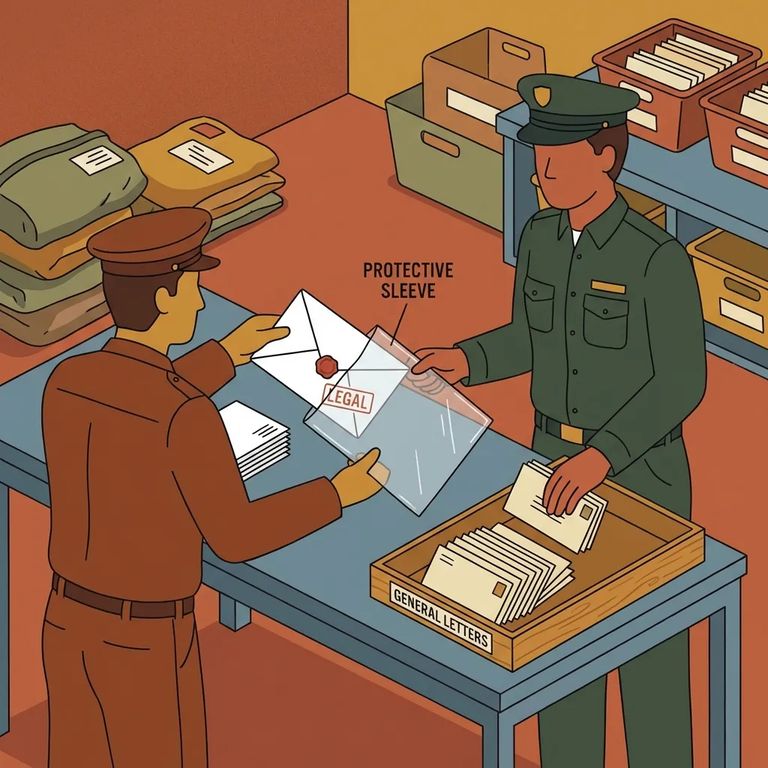
In the Arkansas Division of Correction, “privileged correspondence” is mail tied to specific official or protected senders and recipients. That includes officers of federal, state, and local courts; any federal or state official or agency; ADC administrators; the Parole Board (or any member of it); the Board of Corrections; an inmate’s attorney; and members of the media. If the letter isn’t in one of those categories, it’s treated as general correspondence - even if the topic feels legal or urgent to you.
Privileged incoming mail is supposed to be opened only while the inmate is present, and the purpose of opening it is inspection for contraband. Under those conditions, staff are not supposed to read or censor what’s inside. That said, “not read” doesn’t mean “can’t be rejected” - if the mailing is found to contain contraband, it may be refused in its entirety instead of being delivered.
For outgoing privileged or legal mail, the labeling matters. The envelope needs to be clearly marked with the words “Privileged Correspondence” or “Legal Mail.” If it isn’t, Arkansas DOC can treat it as general correspondence instead, which changes how it may be handled.
General correspondence is the everyday mail most families send - personal letters and routine communication. Arkansas DOC does not place a limit on how many general correspondence letters an inmate may send or receive, so volume alone isn’t supposed to be a problem. But general mail comes with less privacy: all general correspondence, incoming and outgoing, may be opened, inspected, and read, and records may be kept of it. If you’re writing something you wouldn’t want reviewed, assume general mail is not the right place for it.
Arkansas DOC also sets a language rule for letters: they must be written in English unless the Warden or Center Supervisor approves otherwise. If your family normally communicates in another language, that approval is the piece that makes it allowable. If correspondence rules are violated, the policy allows for disciplinary action. Even when your intention is harmless, a rule break can still create consequences for the person incarcerated - so it’s worth slowing down and getting the basics right before you mail anything.

Quick Checklist
- ✓ If it’s outgoing privileged/legal mail, write “Privileged Correspondence” or “Legal Mail” on the envelope - or it can be treated as general mail.
- ✓ Assume general correspondence may be opened, inspected, and read, and that records may be kept.
- ✓ Write letters in English unless the Warden/Center Supervisor has approved another language.
Find an Inmate at East Arkansas Regional Unit
Search for a loved one and send messages and photos in minutes.