
What the new Franklin County facility will offer families: programs, services, and daily life
If your loved one could end up at the planned Franklin County facility, you're probably wondering what daily life would actually look like there. Here's what the design documents say—and what it might mean for your family.
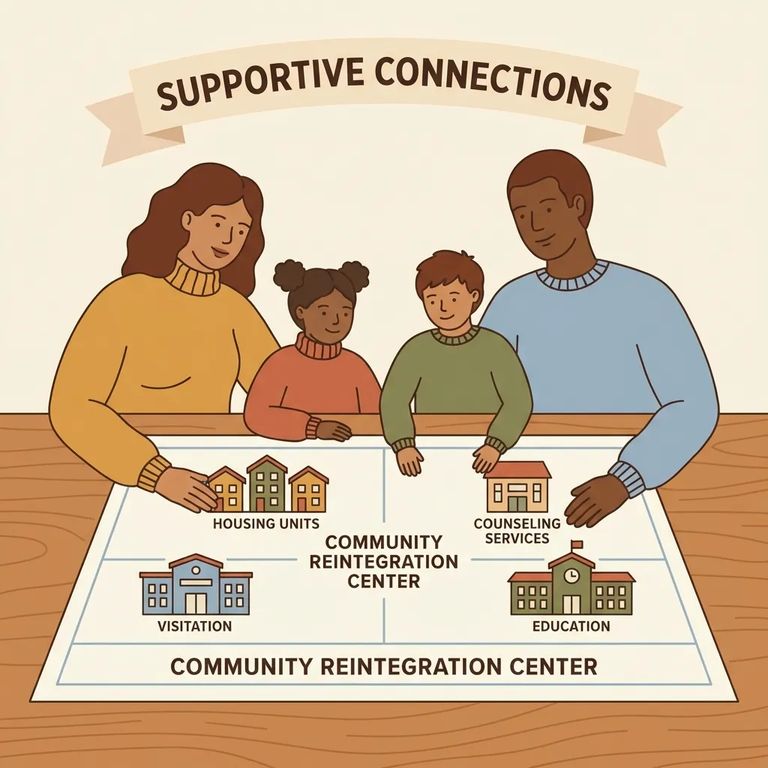
The proposed design puts most core services within each housing unit: dining, recreation, education, healthcare, and counseling. Why does that matter? It means your loved one likely won't be shuffled across campus for every appointment or meal. A typical day could include meals in the unit, scheduled recreation time, education programming, and access to medical or counseling services - all without constant movement. That kind of stability often affects mood and routine, which can make a real difference in how consistently someone keeps up with calls, mail, and visits.
Food is one of the biggest day-to-day concerns families ask about. The plan calls for a centralized kitchen producing roughly 9,500 meals per day. That's a large-scale operation with set meal schedules and tight coordination - when you're making thousands of meals, timing drives everything from staffing to how trays get delivered to housing units. It also means much of the facility's daily rhythm will revolve around meal movements, delivery, and cleanup. Those windows can affect when units are free for programming, recreation, or appointments.
Note: A centralized kitchen shapes the whole schedule - meals become fixed points in the day. Special-diet requests typically run through a standard process. The planned volume (about 9,500 meals daily) also means significant staffing and coordination to keep things running smoothly.

Some behind-the-scenes work has the biggest impact on daily life. Water is a good example. The Department hired MCE/Gilbert's Hard Rock Drilling to evaluate the site's water capacity, and two test wells were drilled on July 30 and July 31. Water affects nearly everything: drinking water, sanitation, showers, laundry, kitchen operations, and healthcare areas. These tests help determine whether the site can handle the steady, high-demand use a large correctional facility requires.
- ✓ Results and analysis from the two test wells (what they show about the site’s water sourcing capabilities)
- ✓ Any permitting or approvals tied to developing a long-term water source for the site
- ✓ Project updates describing how water will be supplied and what backups or contingencies are planned
Planning documents mention a desktop cultural resources study, which found no previously recorded archeological sites or historic properties on the proposed development area. For families tracking the project timeline, this is good news - it reduces the chance of construction delays tied to cultural or historic resources that would require avoidance, redesign, or additional review.
Even with a clean desktop study, formal reviews and permits are still required. The project notes that onsite work may need a Clean Water Act Section 404 permit and coordination with the State Historic Preservation Officer. These steps are procedural, but they can affect timelines - permitting and agency coordination happen on their own schedules, and construction often moves at the pace of what's approved.
Keep in mind: These are design-stage plans - unit-level services and a kitchen sized for about 9,500 meals per day - not guaranteed day-one operations. Once the facility is finalized and closer to opening, look for confirmed policies on visiting rules, schedules, and any formal process for special diets or medical accommodations.
Find an Inmate at Franklin County Ar Jail, AR
Search for a loved one and send messages and photos in minutes.