
Who Can Visit If You Have a Criminal Record: RIDOC's Visitor-Approval Process
Have a criminal record and want to visit someone in RIDOC custody? The key question is whether you'll need special approval. RIDOC runs background checks on all visitors, and in certain situations, the Assistant Director of Institutions and Operations (ADIO) or their designee must sign off before you can visit.

Under RIDOC visitation policy, “immediate family” includes a parent, spouse (including common-law), child, step-child, brother, step-brother, sister, step-sister, grandparent, grandchild, aunt, and uncle. This definition matters because RIDOC treats immediate-family visitors differently from everyone else when it comes to criminal-history approvals.

Even as immediate family, you may still need ADIO/designee approval if certain criminal-history situations apply. Specifically, approval is required if you have a felony record, a pending criminal charge, are currently on probation for a misdemeanor or felony, or are serving a deferred sentence for a misdemeanor or felony. Being immediate family doesn't automatically override these categories - they trigger an extra level of review.
If you're not immediate family - a friend, neighbor, or relative outside RIDOC's definition - the approval net is wider. ADIO/designee approval is required if you have a felony record, a pending criminal charge, a nolo contendere plea or conviction for a misdemeanor, are on probation for a misdemeanor or felony, or are serving a deferred sentence for a misdemeanor or felony. Bottom line: non-immediate visitors with almost any recent or active criminal-justice involvement should expect an approval step before visiting.
RIDOC runs background investigations on all visitors. You need to clear both BCI and NCIC checks to be permitted to visit. If you don't clear both, you won't be allowed in unless the ADIO or their designee specifically approves you. This is the "exception" path people mean when they say they needed special permission because of a record - being on the approved list isn't enough. Your visit has to clear the checks or be approved by the ADIO/designee.
Even when you’re approved, RIDOC’s position is that visits - whether in person or by video - are a privilege, not a right. That means RIDOC administration can approve, deny, suspend, or revoke visiting privileges.
Day-to-day limits are set at the facility level. Wardens decide how many days and hours visiting is allowed, how long each visit lasts, how many weekly visits an inmate can have, and how many people can visit at once. That said, RIDOC policy sets a floor: each facility must offer at least three visiting periods per week for inmates not on Administrative Restricted Status, and each period must be at least one and one-half (1½) hours long.
Note: The warden controls the actual schedule and limits - how many visits per week, how many visitors at once. If you fall into a criminal-history category requiring ADIO/designee approval (like an immediate family member with a felony record), expect that approval step to be part of your process.
One major restriction to know: inmates in disciplinary segregation can only receive visits from attorneys and clergy. If your loved one is in disciplinary segregation, family and friends generally won't be able to visit during that time - even if they're otherwise approved.
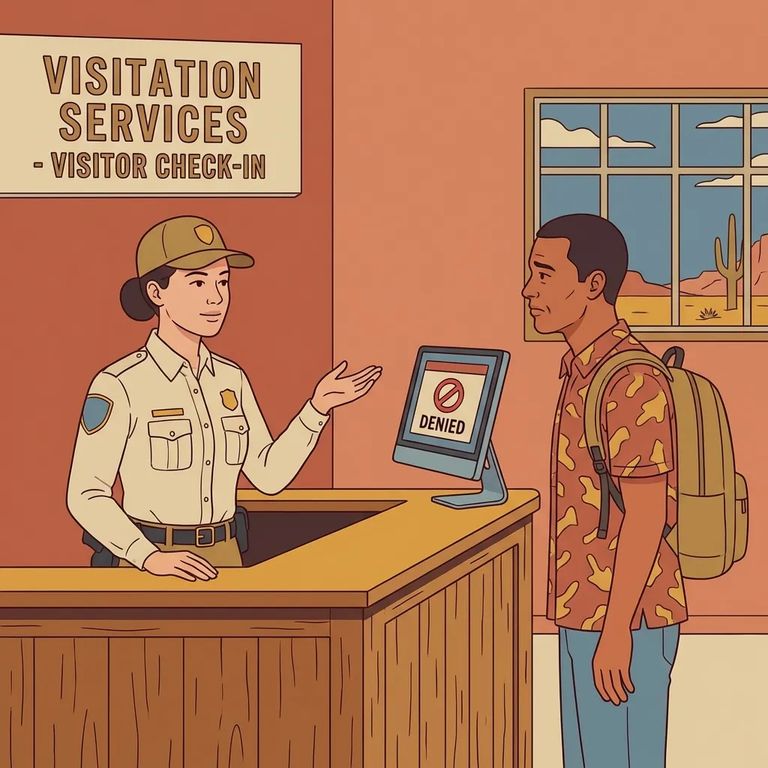
- Find out whether the issue is approval or scheduling - If you’re being told you can’t visit, ask whether it’s because you didn’t clear the background checks or because approval is required due to your criminal-history status.
- Request ADIO/designee review when needed - If your situation falls into an approval-required category, the decision point is the ADIO or the ADIO’s designee.
- Be ready to provide documentation - When RIDOC asks for information, respond with what they request so they can evaluate your eligibility.
- Follow up if you don’t get a clear answer - If you’re stuck, keep your communication focused on the approval requirement and whether a specific approval decision has been made.
Note: If you don't clear both BCI and NCIC checks, you can't visit unless the ADIO/designee specifically approves you. RIDOC can approve, deny, suspend, or revoke visits at its discretion. Documentation and clear follow-up can make a difference.
Find an Inmate at R.I. Travasino Intake Center
Search for a loved one and send messages and photos in minutes.