
How to Become a Correctional Officer in Florida (steps relevant to Liberty Correctional Institution)
Applying to work as a correctional officer in Florida—including at Liberty Correctional Institution? Here are the statewide legal requirements and key milestones you'll need to meet.

This guide covers Florida's statewide requirements for becoming a correctional officer - the rules that apply everywhere, including Liberty Correctional Institution. It won't walk you through a specific employer's application portal or internal hiring timeline, since those vary by agency and change over time. Think of this as your "what you must qualify for" checklist. Once you've confirmed you meet these standards, reach out to the hiring authority for the facility's exact application process.
Before you start thinking about training dates or test prep, confirm you meet Florida's minimum legal qualifications. These are set in state law and serve as the first gate you'll need to clear. Age: Florida requires correctional officers to be at least 18 years old - whether full-time, part-time, or auxiliary. (Some other criminal justice roles have higher age thresholds.) You must also be a U.S. citizen. Education: A high school diploma is required, or an equivalent as defined by the Criminal Justice Standards and Training Commission's rules. Criminal and military history: Certain backgrounds disqualify you. You cannot have been convicted of any felony or a misdemeanor involving perjury or a false statement. A dishonorable discharge from the U.S. Armed Forces also makes you ineligible.
- ✓ I am at least 18 years old (for correctional officer roles).
- ✓ I am a citizen of the United States.
- ✓ I have a high school diploma or an equivalent as defined by Commission rule.
- ✓ I have not been convicted of a felony or a misdemeanor involving perjury or a false statement, and I have not received a dishonorable discharge from the U.S. Armed Forces.
Two steps trip people up because they sound similar but serve different purposes: fingerprints and the background investigation. Florida requires your processed fingerprints to be on file with the employing agency. If you're working as a contractor-employed correctional officer, the documentation goes to the Department of Corrections or the Criminal Justice Standards and Training Commission instead. The background investigation is separate. You must demonstrate "good moral character" through an investigation conducted under Commission procedures. Expect to provide detailed work history and personal information - and be consistent across every form you submit. Discrepancies get noticed.
Tip: Before you pay for duplicate fingerprinting, confirm where your processed fingerprints should be on file - your employing agency, the Department of Corrections, or the Criminal Justice Standards and Training Commission.
You'll need to pass a physical examination conducted by a licensed physician, physician assistant, or advanced practice registered nurse. The exam must follow specifications set by the Criminal Justice Standards and Training Commission.
Certification requires training and testing - not just an application and interview. You must complete a Commission-approved basic recruit training program for the correctional discipline, unless you qualify for a statutory exemption. After training (or an approved exemption), you'll take the officer certification examination and need an acceptable score. Certification isn't "set it and forget it" either - Florida requires ongoing training and education to maintain your credentials.
- Confirm you need basic recruit training - Florida requires a Commission-approved basic recruit training program unless you’re exempt under the law.
- Complete the Commission-approved program - finish the training for the correctional officer discipline.
- Take the state certification exam - you must achieve an acceptable score on the officer certification examination for your discipline.
- Stay eligible after you’re certified - certification comes with ongoing expectations, including continuing training or education requirements.
Reminder: After certification, Florida law requires you to comply with continuing training or education requirements under s. 943.135.
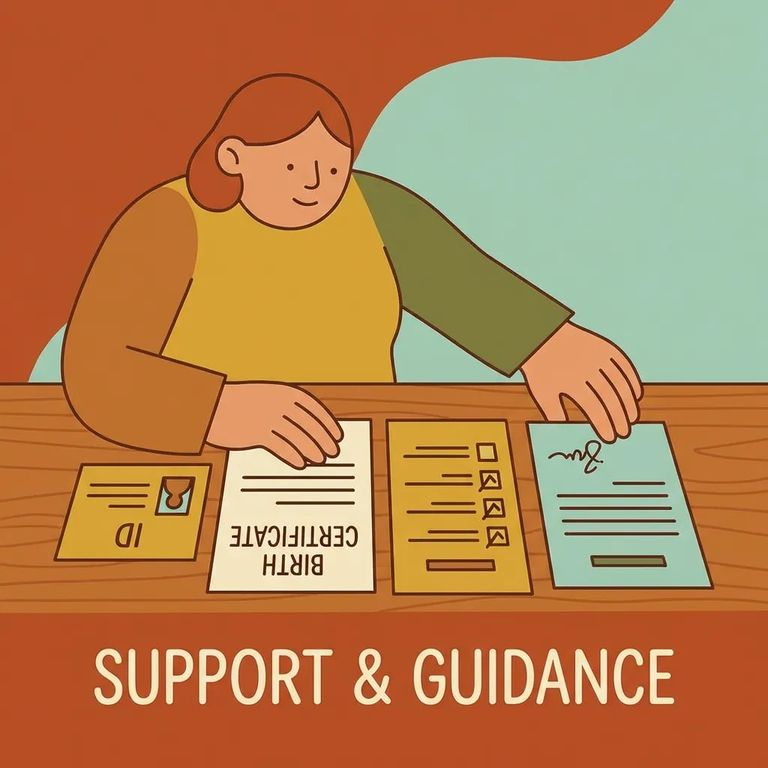
One step people sometimes overlook: the affidavit. You must complete and submit the affidavit-of-applicant form adopted by the Criminal Justice Standards and Training Commission. This form attests that you meet the minimum qualifications - age, citizenship, education, no disqualifying convictions or discharge, fingerprints on file, physical exam completed, and good moral character verified through background investigation. It's how your eligibility gets formally documented during hiring.
- ✓ Age requirement is met (18+ for correctional officer roles).
- ✓ U.S. citizenship requirement is met.
- ✓ High school diploma or Commission-defined equivalent is met.
- ✓ No disqualifying convictions (felony, or misdemeanor involving perjury/false statement) and no dishonorable military discharge.
- ✓ Processed fingerprint documentation is (or will be) on file with the correct entity.
- ✓ Physical examination is passed with a licensed physician, physician assistant, or licensed advanced practice registered nurse, following Commission specifications.
- ✓ Background investigation can support a finding of good moral character under Commission procedures.
Want the process to go smoothly? Do your prep early - before deadlines start pressing. Start by gathering education records: your high school diploma, transcripts, or whatever documentation supports an equivalent under Commission rules. If you have military service history, locate your discharge paperwork. Any criminal history that could raise questions? Get those records together so you can answer forms accurately. Next, plan for two appointments people often scramble to schedule: fingerprinting and the physical exam. Your employer will tell you where to send fingerprint documentation. The physical must be completed by an eligible licensed provider following Commission specifications. Finally, track down the Commission-adopted affidavit-of-applicant form early. Complete it carefully and make sure it's consistent with the rest of your paperwork. Family members can help more than you'd expect. A second set of eyes on forms, help tracking down documents, reliable transportation to appointments - these small assists keep a minor delay from turning into weeks of setback.
- ✓ Find and copy your high school diploma or proof of an equivalent recognized by Commission rule.
- ✓ Gather military discharge documents (if applicable).
- ✓ Collect any paperwork you’ll need to accurately report prior arrests/charges/convictions (if applicable).
- ✓ Confirm where your processed fingerprint documentation must be on file and what your employer expects you to submit.
- ✓ Schedule and complete the required physical exam with an authorized provider.
- ✓ Obtain and complete the Commission-adopted affidavit-of-applicant form carefully.
- ✓ Keep a folder (paper or digital) with clean copies of everything you submit.
- ✓ Arrange transportation and time off for fingerprinting, medical exams, and testing dates.
Liberty Correctional Institution is part of Florida's correctional system, but the specific application steps - where to submit, who the HR contact is, what additional documents you'll need - vary by employer and can change. Treat the legal requirements above as your foundation, then verify the current hiring process directly with the hiring authority and, if needed, the Criminal Justice Standards and Training Commission. One DOC rule you may encounter during employment is Florida Administrative Code Rule 33-208.402, titled "Professional License, Certification and Registration Requirements." The practical takeaway: confirm you're meeting the correct licensing and certification expectations and following the instructions provided for the position you're applying to.
Find an Inmate at Liberty Correctional Inst.
Search for a loved one and send messages and photos in minutes.