
What the Family Connections Center Can Do for Your Family (And How to Access It)
Trying to support someone in New Hampshire custody while keeping your own family grounded? The Family Connections Center is one of the most practical places to start. Here's what it offers and how to access it.
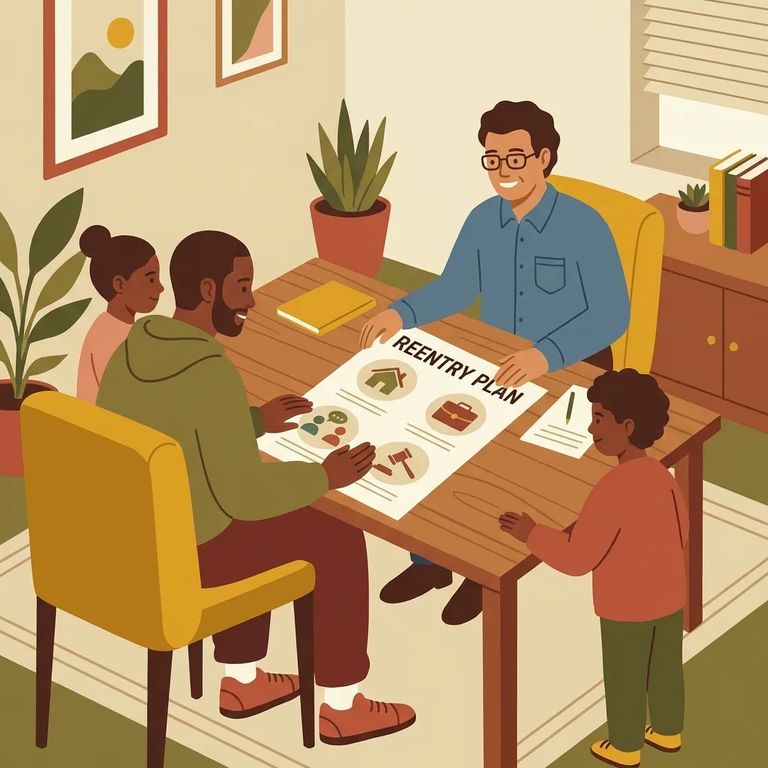
The Family Connections Center (FCC) is a family resource center that operates across the New Hampshire Department of Corrections system. You'll find FCC support in all three New Hampshire State Prisons and in minimum-security units, including the Shea Farm Transitional Housing Unit for women.
The FCC has been providing family support services and parenting education in the New Hampshire Department of Corrections since 1998. It's grown beyond just offering support inside the prisons - partnering with community agencies so families affected by incarceration can access education and resources that connect to life outside the facility.
One of the biggest expansions came through a partnership with Waypoint. They received the Second Chance Grant (#2020-IG-BX-0002) to expand reentry programming and build stronger "systems of care" for children with an incarcerated parent. The resulting program, Family Ties Inside Out, connects newly incarcerated parents in New Hampshire jails and prisons to their local family resource centers - so support doesn't stop at the facility door.
Quick takeaway: Family Ties Inside Out connects newly incarcerated parents to local family resource centers and creates support groups for children (by age) and for caregivers.
- Start by asking about FCC services where your loved one is housed - FCC operates in all three New Hampshire State Prisons and in minimum-security units (including Shea Farm Transitional Housing Unit for women), so the first question is what’s available at that specific location.
- Ask what family support and parenting education options are currently offered - FCC has provided family support services and parenting education in NHDOC since 1998, and offerings can include supports meant to strengthen family connections.
- Request the right referral or sign-up path - because FCC also partners with community agencies, you can ask how to get connected to any outside supports that may apply to your family’s situation.
- ✓ Which facility or unit is your loved one in, and does that location have FCC services on-site (including minimum-security units like Shea Farm Transitional Housing Unit for women)?
- ✓ Who is the best point of contact for FCC questions at that location?
- ✓ What family support services and parenting education are available right now through FCC?
- ✓ Are there community-agency partners connected to FCC that families can access for education or support?
- ✓ If your loved one is a newly incarcerated parent, ask whether Family Ties Inside Out connections to local family resource centers are available
- ✓ Are there support groups available for children (by age) and for caregivers through Family Ties Inside Out?
Note: FCC is available across New Hampshire State Prisons and certain minimum-security units, but the contact person and sign-up process vary by location. Family Ties Inside Out support depends on the Waypoint partnership and how the program is coordinated for your situation.
Find an Inmate at NH State Prison
Search for a loved one and send messages and photos in minutes.