
How to Get on the Visiting List at Raymond Laborde — What If You Have a Criminal Record or Are on Supervision
Trying to visit someone at Raymond Laborde C.C. when you have a criminal record or you're on probation or parole? It's still possible—but you'll need to understand how Louisiana DOC handles approvals and denials.

Raymond Laborde C.C. follows Louisiana DPS&C visitation policy, which aims to keep the process consistent across institutions while maintaining safety and security. The bottom line: you can't just show up and expect to get in. You must be on the incarcerated person's approved visiting list first. The person you want to visit gets information on how to add people to their list, so the process usually starts on their end - they make the request and kick off the approval process.
Tip: Before you travel, confirm you’re on the approved visiting list. If you’re not sure, contact the person you want to visit and ask them to verify.
Most people housed at Raymond Laborde C.C. can apply for visitation, but there's one common early exception: intake status. If your loved one is still in intake, visits aren't allowed during that period. Intake typically covers the first 30 days after placement, while the facility completes processing and makes housing and classification decisions. This "no visits during intake" rule applies even to close family members.
Note: If intake stretches beyond 30 days, your loved one can ask about a special visit with immediate family under the applicable intake/reception visiting procedures.
A prior criminal conviction doesn't automatically disqualify you from visiting at Raymond Laborde C.C. Louisiana DOC's rule is clear: a conviction alone isn't enough to ban someone. That said, the facility can deny approval if the nature of your offense suggests your presence could threaten institutional security or stability. When that happens, it can't be an informal decision - any denial on this basis must include written justification from the Warden or a designee who is an Assistant Warden or higher. This is how the system balances visitation access with security needs.
If you’re denied: Ask for the written justification. Policy requires the decision to be documented by the Warden or an Assistant Warden (or higher designee).
If you're an ex-offender or currently on probation or parole, the same principle applies: your status alone doesn't automatically bar you from visiting. Certain felony histories can still lead to denial when the facility believes the security risk is too high. But if that happens, the decision should be documented with a security-based justification - not just a blanket "no."

If you're on supervision (or you're an ex-offender still under conditions), one piece of paperwork can make a real difference. Louisiana DOC policy says an approval letter from your supervising officer - Form OP-C-9-e - creates a presumption that you should be eligible for visitation. It doesn't guarantee approval in every case, but it's the clearest way to show you have permission and that your supervision status has been reviewed. Bringing this documentation upfront can prevent delays and back-and-forth.
- ✓ Approval letter from your supervising officer (Form OP-C-9-e)
- ✓ Valid government-issued photo ID
- ✓ Any documentation that clarifies your current supervision status (probation/parole/ex-offender)
- ✓ If you’re denied despite providing documentation, ask for the written security-based justification
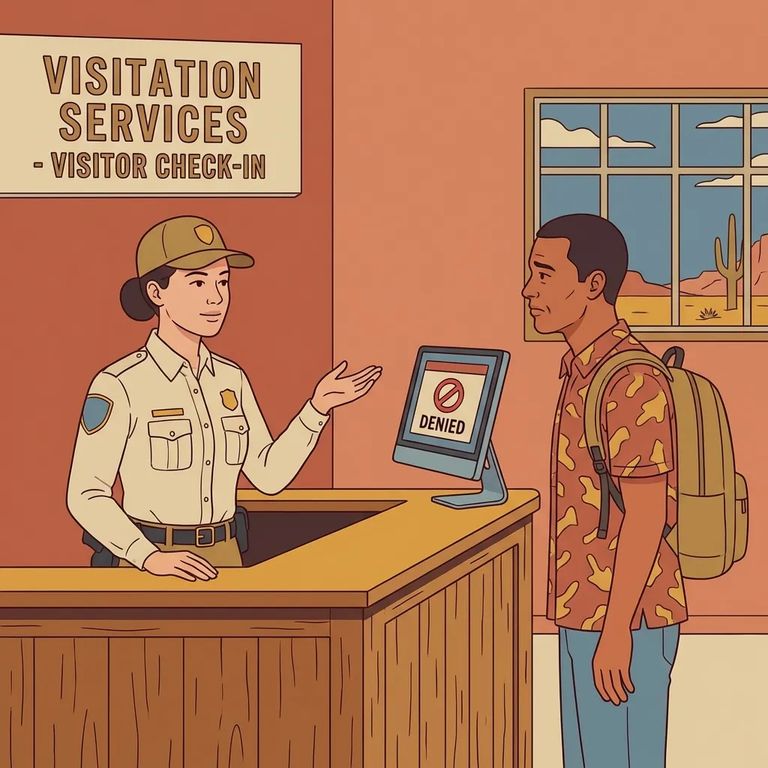
If you're denied visitation because of your record or supervision status, that's not supposed to be a casual decision. A denial tied to criminal history must be based on security concerns and supported with written justification from the Warden or an Assistant Warden (or higher designee). For people on probation or parole (or ex-offenders), Form OP-C-9-e matters because it creates a presumption of eligibility - so if you didn't provide it, that's a fixable problem. Even when the facility believes a particular felony history justifies denial, you have the right to ask for the decision to be properly documented.
- Ask for the written justification - If the denial is based on your criminal history or security concerns, request the written explanation from the Warden or an Assistant Warden (or higher designee).
- Provide supervision approval paperwork - If you’re on probation/parole (or an ex-offender under supervision), submit the supervising officer’s approval letter (Form OP-C-9-e) to support eligibility.
- Confirm visiting-list status - Make sure the incarcerated person has you on their approved visiting list, and follow up through the appropriate facility process if you still aren’t showing as approved.
Find an Inmate at Raymond Laborde Corrections, LA
Search for a loved one and send messages and photos in minutes.