
What You Can and Can't Do During a TDCJ Contact Visit — concise checklist
Contact visits come with strict rules, and staff are always watching. This quick checklist will help you avoid interruptions.
1
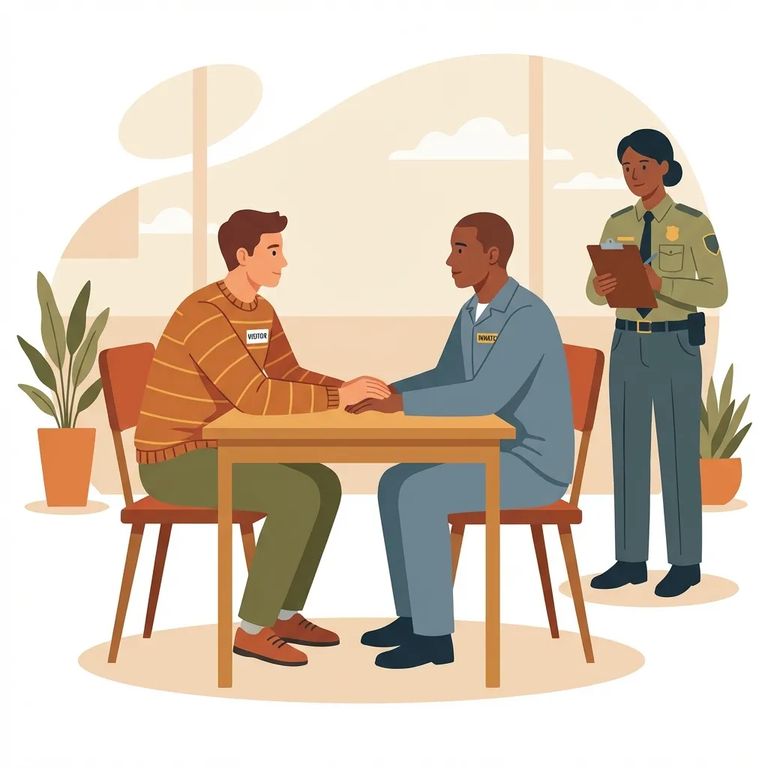
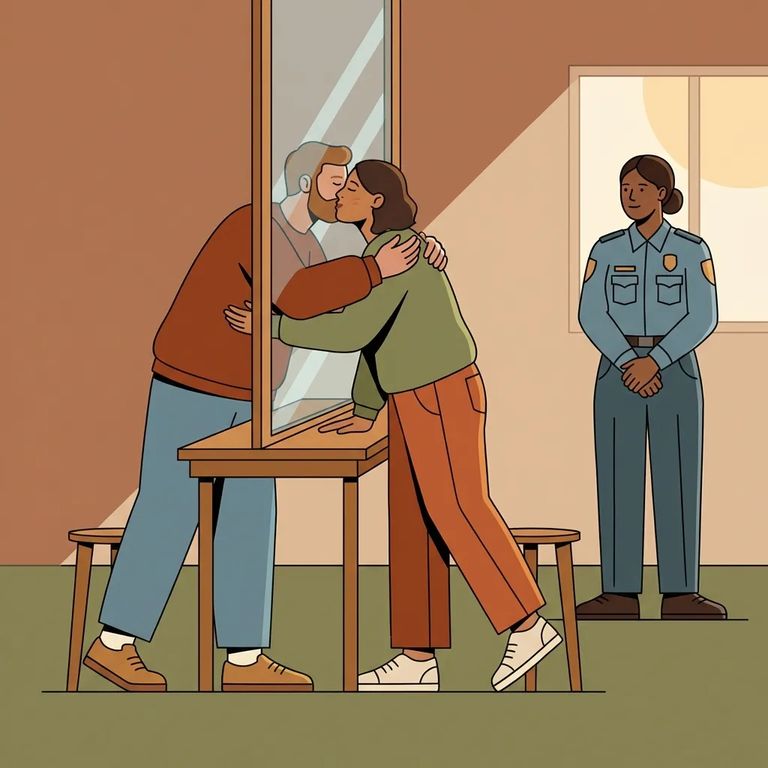
- ✓ Hug and kiss: Allowed once at the beginning of the visit and once at the end.
- ✓ Hold hands: Allowed only if your hands stay on top of the table and in full view of staff.
Note: Keep your hands visible on the tabletop at all times. If they drop below the table or out of sight, staff can intervene and end the contact.
You and the incarcerated person sit on opposite sides of the table during a TDCJ contact visit. No sitting side-by-side - plan on talking face-to-face across the table.
One exception: the incarcerated person can hold their young children during the visit. Otherwise, expect staff to enforce the "opposite sides of the table" rule.
Assume everything you say and do is being watched. TDCJ states that all visits - except attorney-client visits - may be electronically monitored. Don't expect privacy.
4
- ✓ Keep physical contact to one hug/kiss at the start and one hug/kiss at the end of the visit.
- ✓ If you hold hands, keep them on top of the table and easy for staff to see.
- ✓ Speak and act like you’re being recorded, because non-attorney visits may be electronically monitored.
If you’re unsure about anything beyond contact rules - like what you can carry in or what has to stay in your car - check the unit’s posted visitation rules before you go. When in doubt, keep it simple and bring only what you know is allowed.
If staff says you broke a rule, take it seriously. Follow their directions immediately - arguing usually makes things worse. Since visits (other than attorney-client) may be monitored, the unit can review what happened. For next steps, contact the unit and ask to speak with the duty warden or Family Liaison Officer (FLO).
6
- ✓ If you’re 18 or older, bring a current, official government-issued photo ID (a student ID does not count).
- ✓ If you’re bringing a child 17 or younger, they may be required to show ID such as a birth certificate, state-issued ID, or a student ID (student ID is allowed only for visitors 17 and younger).
Find an Inmate at Tulia Unit
Search for a loved one and send messages and photos in minutes.