
Can Inmates at Clemens Write to Each Other? The I-60 Request Process and Correspondence Rules
Writing to another incarcerated person from the William P. Clemens Unit isn't as simple as dropping a letter in the mail. These letters are treated as general mail—they can be inspected and rejected if they violate TDCJ correspondence rules.
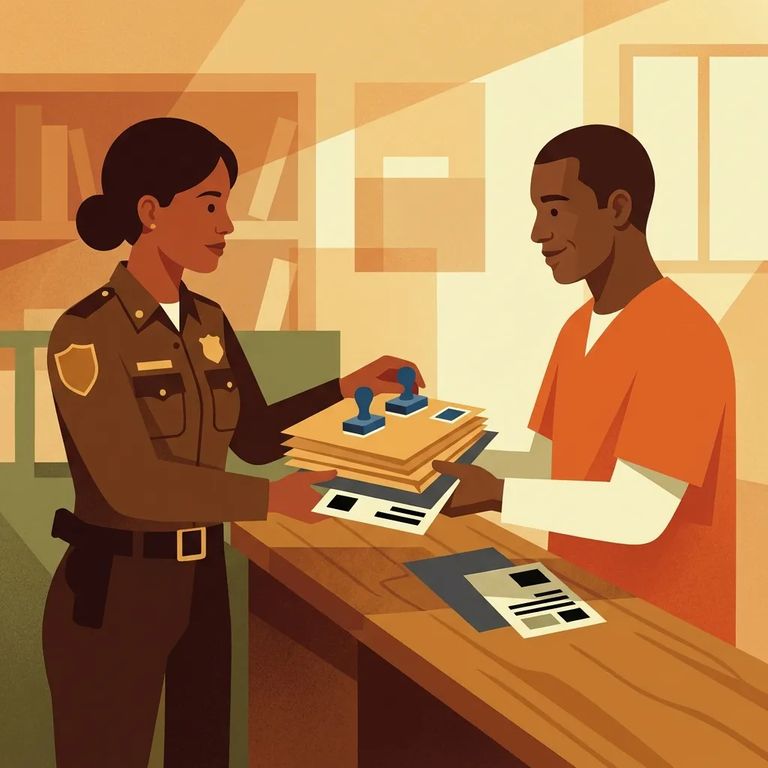
Writing to another incarcerated person from the William P. Clemens Unit isn't as simple as dropping a letter in the mail. These letters are treated as general mail - they can be inspected and rejected if they violate TDCJ correspondence rules.
An I-60 is the formal request an inmate submits to the Unit Records Office to get permission to correspond with an incarcerated family member. The form requires specific details: the requesting inmate's name, TDCJ number, unit of assignment, living quarters, and work assignment. Miss any of these or get something wrong, and the request can stall before it ever reaches the correspondence stage.
- ✓ Other inmate’s name (as it appears in TDCJ records)
- ✓ Other inmate’s TDCJ number
- ✓ Other inmate’s current unit of assignment
- ✓ The relationship between the two inmates
Relationship matters. The I-60 process only permits correspondence requests between immediate family members: parent, grandparent, step-parent, spouse, common-law spouse, child, grandchild, step-child, brother, or sister. If the relationship doesn't fit one of those categories, the request won't qualify.
Note: For these correspondence rules, TDCJ uses “inmate” broadly - someone incarcerated in a local, state, or federal facility, including juveniles held in Texas Youth Commission (TYC) facilities.
Approval doesn't mean privacy. At the William P. Clemens Unit, inmate-to-inmate correspondence counts as general correspondence - and general correspondence can be inspected. Letters can also be rejected if the content violates TDCJ rules. This applies even when the letters touch on legal matters. Assume anything written could be read and screened.
- Assume the letter is treated as general mail - approved inmate-to-inmate correspondence is still subject to inspection, and it can be rejected if it violates correspondence rules.
- Review what was sent (and how it was framed) - if content violates the rules, the letter can be stopped, so the safest move is to keep messages straightforward and within the correspondence rules.
- Follow up through Unit Records - because the I-60 request goes through the Unit Records Office, that’s the place the inmate can route questions about the request or correspondence approval process when something doesn’t go through as expected.

Practical Tips Families
- ✓ Make sure the requesting inmate includes their own name, TDCJ number, unit of assignment, living quarters, and work assignment on the I-60.
- ✓ Double-check the other inmate’s name exactly as it appears in TDCJ records.
- ✓ Confirm the other inmate’s TDCJ number.
- ✓ Confirm the other inmate’s current unit of assignment.
- ✓ Make sure the relationship listed is one of the allowed family relationships.
If letters aren't getting through, remember that inmate-to-inmate mail can be inspected and rejected for rule violations. For paperwork issues - delays or problems with the I-60 approval - the Unit Records Office handles those. That's where the I-60 gets submitted and where your loved one should follow up if something seems stuck.
Tip: Before you travel to the William P. Clemens Unit for a visit, call the unit for final confirmation - visitation information is updated daily and multiple times on visitation days.
Find an Inmate at William P. Clemens Unit
Search for a loved one and send messages and photos in minutes.