
Wyandotte County Mail Settlement: How to Send and Receive Letters (what changed and what families must know)
Writing to someone at Wyandotte County? The settlement notice brings good news: letters in envelopes are now allowed for non-privileged mail. That said, there are still limits on letter length and how much mail your loved one can keep in their cell.
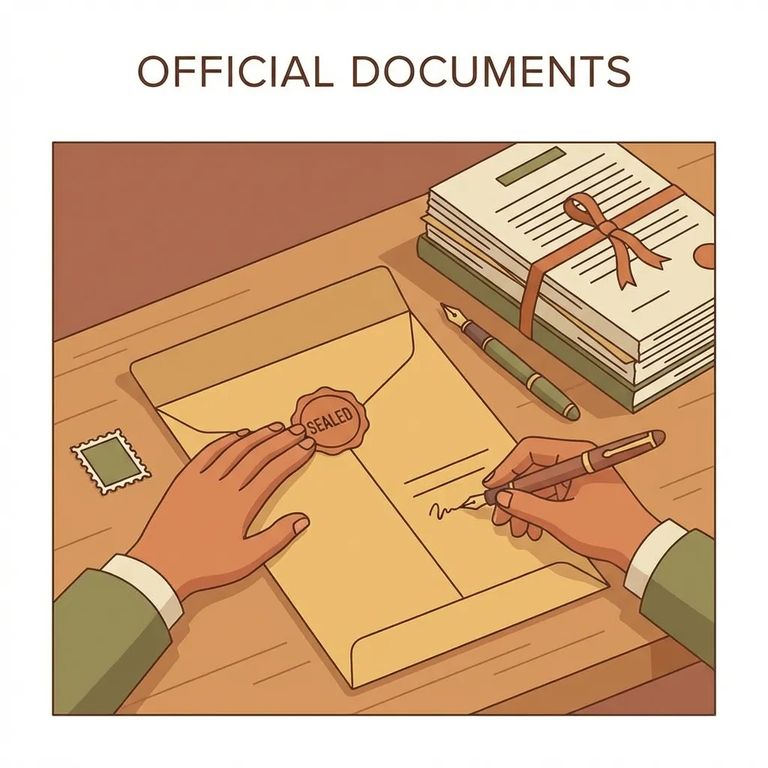
Under the settlement, the Sheriff cannot prohibit inmates from sending or receiving non-privileged letters in envelopes - with a few specific exceptions spelled out in the notice. The bottom line for families: you can use regular envelope mail for personal correspondence. Just follow the facility's stated limits, like the one-page rule.
Want the official wording? The Notice of Proposed Settlement is available in both English and Spanish. For settlement questions or to request documents, contact class counsel: Stephen Douglas Bonney (ACLU Foundation of Kansas) at dbonney@aclukansas.org or (816) 994.3311, or Joshua A. Glickman (Social Justice Law Collective) at josh@sjlawcollective.com or (913) 213-3064.
The settlement covers "non-privileged" letters between inmates and people outside the Jail and Juvenile Detention Center. Incoming mail gets the same protection: the Sheriff cannot prohibit inmates from receiving non-privileged letters in envelopes, except where the notice says otherwise. If you're a family member or friend, your ability to send and receive envelope letters is protected - the details come down to the limits and exceptions in the notice.
Note: "Non-privileged" means regular personal mail. "Privileged" mail typically refers to legal correspondence. The notice also addresses free materials for indigent inmates to send a limited number of privileged letters each week.
Even with envelope letters allowed, the Sheriff can still limit each letter to a single piece of paper, front and back. That paper must be at least 7.25 inches wide by 10.5 inches tall - so small notes or cut-down paper could cause problems.
- ✓ Use one sheet of paper total, written on the front and back only
- ✓ Make sure the paper is at least 7.25" wide by at least 10.5" tall (standard letter paper meets this)
- ✓ Keep everything to that single sheet - no “page 2,” no extra pages tucked in
- ✓ If you need more space, write more tightly rather than adding another sheet
The notice addresses volume limits too. The Sheriff cannot restrict how many letters or postcards an inmate sends or receives unless there's clear evidence a restriction is needed for safety, order, or security.
Here's the catch: the Sheriff can still limit how many letters or postcards someone keeps in their cell. So mail may flow freely, but your loved one might not be able to hold onto everything in their living space.
If your loved one is indigent, the settlement requires the Sheriff to provide basic supplies so they can stay in touch. That means a pen or pencil, plus enough paper, postage, and envelopes to send at least two non-privileged letters per week - at no cost.
Privileged letters work a bit differently. Upon request, the Sheriff must provide materials for each indigent inmate to send at least two privileged letters per week at no expense. The key words: "indigent" and "upon request." Your loved one needs to ask for these materials.
Tip: If your loved one says they can't afford postage or paper, have them ask the facility about indigent supplies for non-privileged mail (and privileged mail if needed). For disputes about what the settlement provides, start with the class counsel contacts listed in the notice.
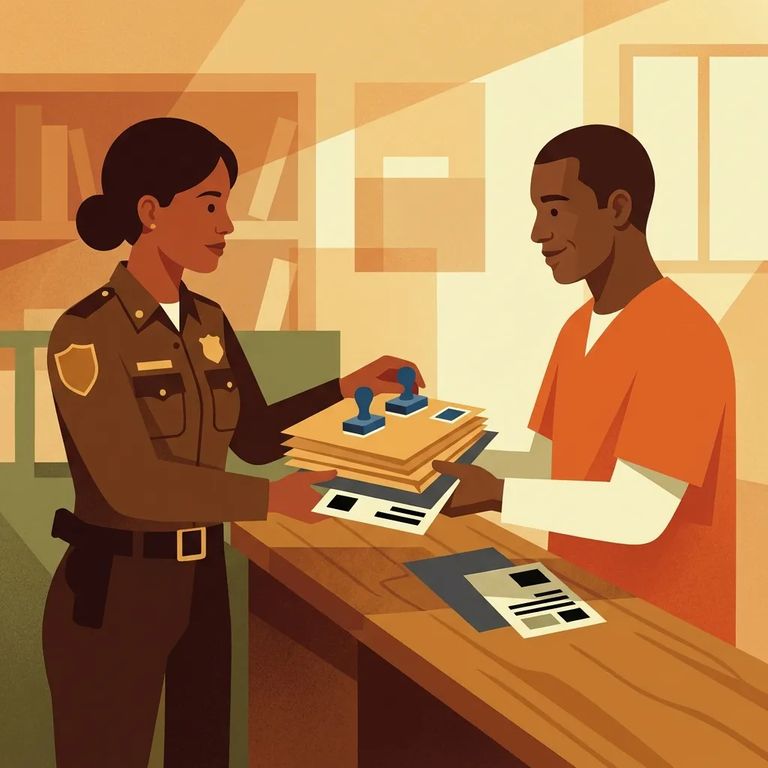
Most family letters count as "non-privileged" mail. "Privileged" mail is legal correspondence - and the settlement's main point here is access: indigent inmates can request materials to send up to two privileged letters per week at no cost. If you're helping with legal communication, treat those letters as a separate category so your loved one knows to ask for the right materials.
- ✓ If a letter is legal/attorney-related, have your loved one request indigent privileged-mail materials if they qualify
- ✓ Keep personal letters “non-privileged” and within the one-sheet (front-and-back) length limit
- ✓ When in doubt about whether something counts as privileged, your loved one should ask for guidance before sending it
The full Notice of Proposed Settlement is available in English and Spanish - it's the best source for exact wording on mail rules and exceptions. For settlement questions or document requests, contact class counsel: Stephen Douglas Bonney (ACLU Foundation of Kansas) at dbonney@aclukansas.org or (816) 994.3311, or Joshua A. Glickman (Social Justice Law Collective) at josh@sjlawcollective.com or (913) 213-3064.

Practical Tips
- ✓ Write on a single sheet only, using both sides, and don’t add extra pages
- ✓ Use paper that clearly meets the minimum size (at least 7.25" x 10.5") so it doesn’t get flagged as non-compliant
- ✓ If you’re sending frequent letters, keep them steady and straightforward - volume limits aren’t supposed to be imposed unless there’s clear evidence tied to safety, order, or security
- ✓ Remember that even when mail is allowed in, your loved one may not be allowed to keep unlimited letters in their cell, so consider keeping copies of anything important on your end
Heads up: The facility can act when safety, security, or order is at stake, and it can limit how much mail someone keeps in their cell. If mail problems persist, document dates and reach out to class counsel using the contacts in the notice.
Find an Inmate at Wyandotte County Juvenile Detention, KS
Search for a loved one and send messages and photos in minutes.