
Visiting Restrictions at Allen Oakwood: What Violations Mean and How Long Bans Last
Allen Oakwood enforces visiting rules through ODRC's mail and visiting restriction guidelines. Consequences for violations range from a warning to a permanent ban—so understanding what counts as a violation and how restriction lengths work can save you trouble down the road.
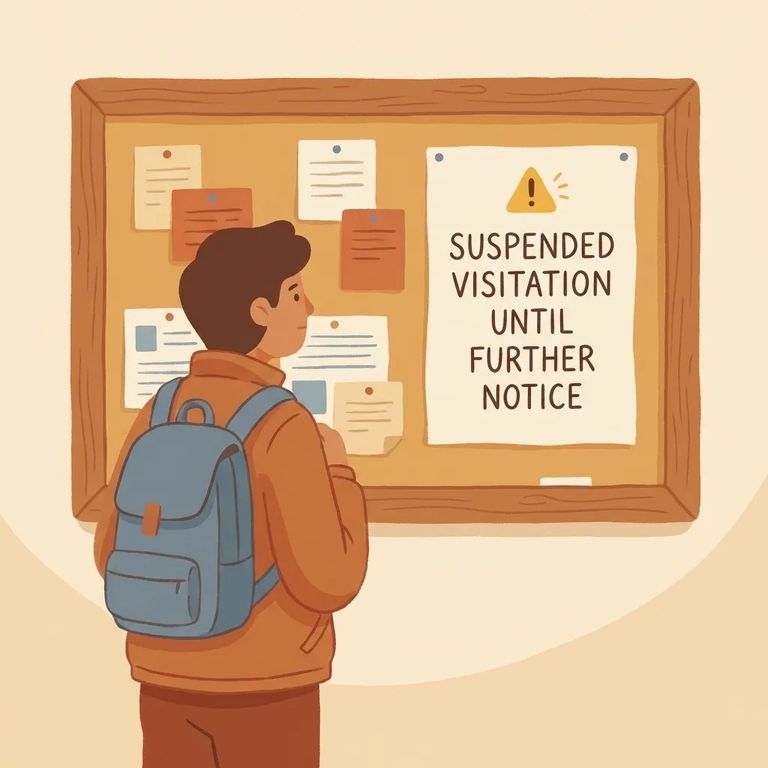
One major category in ODRC's Mail & Visiting Restriction Guidelines is Possession/Conveyance of Contraband. This applies when someone has contraband or tries to bring it into the prison. The guidelines specifically call out weapons (and ammunition), drugs, intoxicating liquor, money/cash, and communication electronics - cellular phones, two-way radios, and similar devices. If staff believe an item falls into this category, it can trigger visiting and/or mail restrictions.
Warning: Leave cash, phones, two-way radios, and any other electronic communication devices at home. Never bring weapons, ammunition, drugs, or intoxicating liquor. All of these are treated as contraband and can result in serious visiting consequences.
The guidelines use progressive restriction lengths for contraband-related violations. Depending on what happened and whether it's a first offense or repeat, the restriction can be a Warning, 3 months, 6 months, 1 year, or Permanent. The pattern is straightforward: more serious violations - or repeat offenses - mean longer restrictions.
Restriction outcomes can feel inconsistent because the managing officer at the institution has discretion over key aspects of visitation - the number of visitors allowed, visit frequency, visit length, priority, and hours. This discretion doesn't override the restriction guidelines, but it does shape how visitation runs day to day, including how access is handled when restrictions apply.
Keep in mind: Restrictions can escalate all the way to a permanent ban. Separately, if an inmate is found guilty by the RIB or an outside court, they may lose visiting privileges for one year.
A permanent restriction means you're barred from visiting going forward. One detail that catches families off guard: under the guidelines, a visitor who is present during a violation can be restricted permanently - even if you weren't the one who committed the act. There's also a separate consequence for the incarcerated person: if found guilty by the Rules Infraction Board (RIB) or by an outside court, they may lose visiting privileges for one year.
Critical: Being present during a violation can be enough for a visitor to be restricted permanently.

If you're trying to find out whether you're restricted - or what your options are - contact the facility directly. Ask what the restriction is based on and what steps exist to review it. Also make sure your visitor paperwork is complete: you won't be approved until you've submitted the Visiting Application (DRC2096), signed the Declaration of Understanding (DRC2554) and General Visiting Instructions (DRC2274), and provided a copy of your bona fide identification. Once approved, you'll need to register with GTL to schedule visits.
- ✓ Keep copies of your Visiting Application (DRC2096), Declaration of Understanding (DRC2554), General Visiting Instructions (DRC2274), and the ID copy you submitted.
- ✓ Write down dates, names, and what you were told each time you contact the facility about the restriction.
- ✓ If you’re approved to visit, register with GTL (gtlvisitme.com) so you can schedule.
- ✓ Ask the facility what the review/appeal steps are for the restriction and what timelines apply.
Find an Inmate at Allen C.I., OH
Search for a loved one and send messages and photos in minutes.