
Can You Vote While Incarcerated in Arizona? A Guide for Families (ASPC‑Kingman/Huachaca Unit)
If your loved one is at ASPC‑Kingman/Huachaca Unit, the first question is whether they can vote. Some people in custody can still register and cast a ballot in Arizona. Here's who may qualify, what a "full ballot" means, and what steps to take.
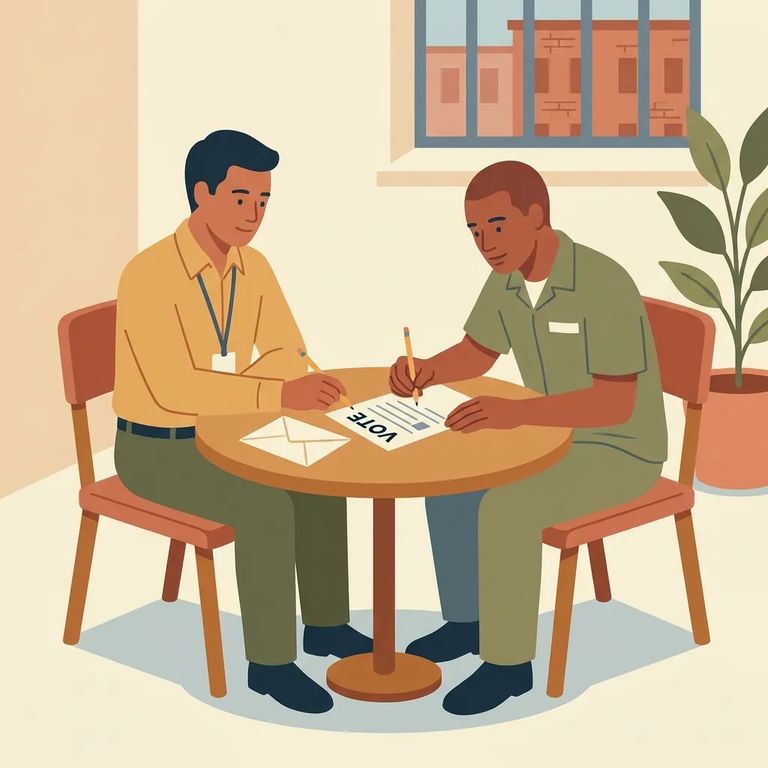
In Arizona, people in pretrial detention and those serving misdemeanor sentences can still register and vote - as long as they meet the other standard requirements. That said, eligibility hinges on someone's exact legal status. Before diving into registration and ballot logistics, confirm the details of your loved one's case.
Arizona's "full ballot" includes all federal, state, county, and local races plus ballot questions. To get one, proof of U.S. citizenship must be submitted with the voter registration - or no later than 5:00 p.m. on the Thursday before Election Day. Miss that deadline, and your loved one may receive a limited ballot that excludes some races.
- ✓ Confirm whether proof of U.S. citizenship was submitted with the original voter registration
- ✓ If it wasn’t, gather the proof of U.S. citizenship needed for a full ballot
- ✓ Submit the proof with the voter registration, or submit it separately by the deadline (5:00 p.m. on the Thursday before Election Day)
Deadline reminder: Proof of U.S. citizenship must be submitted with registration or by 5:00 p.m. on the Thursday before Election Day to receive a full ballot.
After a registration goes through, Arizona mails a voter registration card within 4–6 weeks. That card is usually the clearest sign everything worked. If your loved one is registering from custody, plan around that window. No card after six weeks? Time to follow up.
- Check whether the registration was successful - confirm the voter’s status using the options provided by election officials.
- Watch for the voter registration card - after successful registration, the card should arrive by mail within 4–6 weeks.
- Follow up if the card doesn’t arrive - contact the County Recorder’s office to confirm the registration record and what (if anything) is still needed.
Getting a ballot while in custody adds steps, but Arizona accounts for this. County Recorders may work with the sheriff's office, detention facilities, and the public defender's office to set up procedures for receiving and returning mail-in ballots. The exact process varies by county and facility - so the biggest step is often just getting someone to explain how it works locally.
- ✓ Contact the County Recorder to ask what procedures are in place for ballot-by-mail for eligible voters in custody
- ✓ Ask facility staff (such as the unit or mailroom point of contact) what the internal process is for receiving and returning ballots-by-mail
Next Steps
- ✓ Confirm your loved one’s custody status (pretrial detention or serving a misdemeanor sentence) and that they meet other voter eligibility requirements
- ✓ Make sure proof of U.S. citizenship is submitted for a full ballot (with registration or by 5:00 p.m. on the Thursday before Election Day)
- ✓ Keep track of key dates so proof and ballot steps aren’t left until the last minute
Helping from the outside? Work two tracks at once. First, contact the County Recorder - county offices often coordinate with sheriffs and detention facilities on mail-in ballot procedures. Second, check with facility staff about how election materials are handled inside. And keep that 4–6 week timeline in mind for the voter registration card. If it doesn't show up, that's your cue to follow up.
Quick reality check: Eligibility depends on your loved one's exact legal status, and mail-in ballot procedures vary by county and facility. Don't miss the proof-of-citizenship deadline if you want a full ballot.
Find an Inmate at ASPC-Kingman/Huachaca Unit
Search for a loved one and send messages and photos in minutes.