
How Centralia's New Mail Scanning & Publication Rules Affect Letters, Photos, and Books
Mail at Centralia Correctional Center is changing significantly: most personal mail now gets scanned and delivered electronically to tablets. Here's how letters, photos, and publications work under IDOC's new process—and what you need to do differently when sending something.
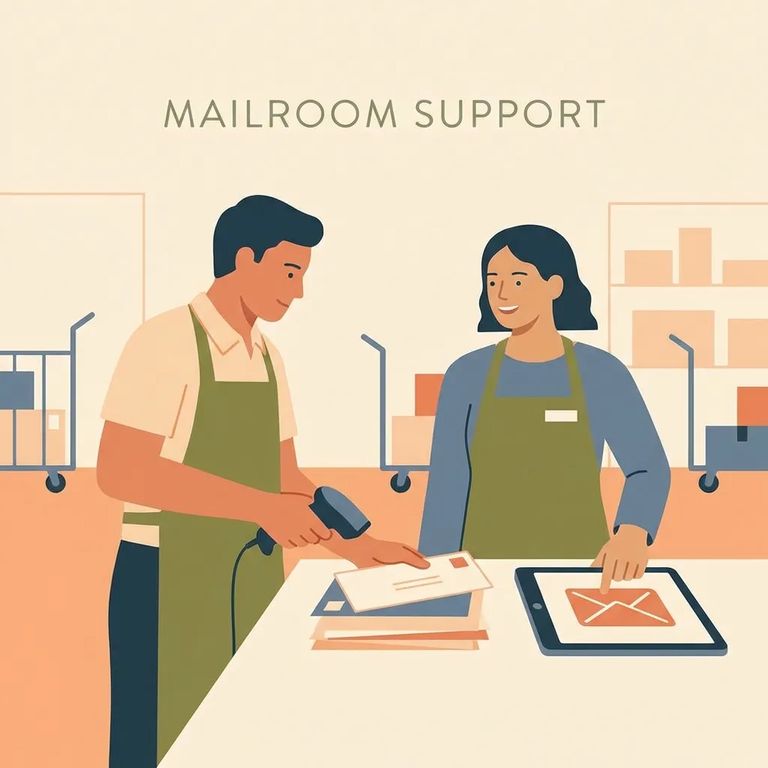
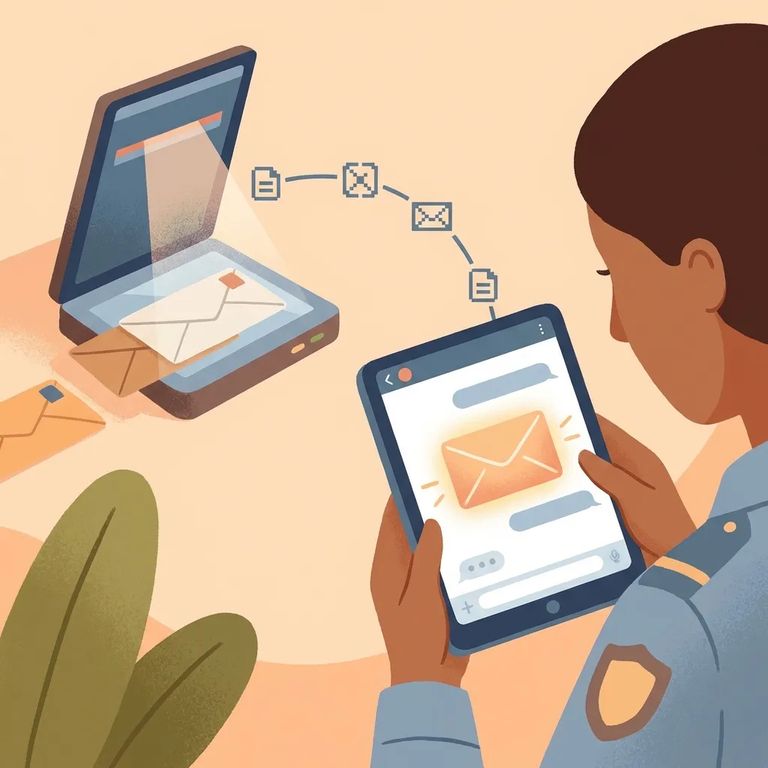
IDOC mailrooms now scan or photocopy incoming non-privileged mail instead of delivering the original paper. They scan both sides of the envelope plus everything inside - letters, greeting cards, photographs, and similar inserts. These scanned images become PDF files uploaded to the person's Bulletin Board, viewable on their tablet.
When new scans are uploaded, the person in custody gets a notification that documents are ready to download. If you're wondering whether something arrived, keep in mind that "delivered" now often means "posted to the Bulletin Board" - not handed over in paper form.
Note: Only written correspondence, greeting cards, drawings, and photos are accepted for scanning - and IDOC’s existing “unauthorized mail” rules still apply.
Publications work differently from regular letters. IDOC does not scan or photocopy publications as part of the incoming mail scanning process.
One exception for photos: originals mailed directly from a photo printing vendor (with the vendor's watermark or logo) are delivered in their original form - unless they're otherwise considered unauthorized.
Beyond publications, several other categories skip the scanning process. These include official government documents, correspondence from IDOC staff to someone in custody, anything classified as "unauthorized mail" under IDOC rules, and mail addressed to the facility that will be returned to sender.
Starting September 30, 2025, books, magazines, newspapers, and other publications must be mailed directly from the publisher. This includes bookstores, book clubs, and online retailers.
Heads up: After September 30, 2025, visitors can’t drop off books, magazines, or other publications at the facility for a specific individual.
These two rules together change what sending reading material to Centralia looks like. Publications aren't scanned to tablets, and starting September 30, 2025, they must come directly from the publisher (including bookstores, book clubs, and online retailers). If you've been dropping off books or magazines during visits, plan now to switch to ordering and shipping from an approved publisher source instead.
"Privileged mail" is a specific IDOC category. It covers mail to or from the IDOC Director, Assistant Directors/Chiefs/Deputy Directors, Department attorneys, Administrative Review Board members, Prisoner Review Board members, and the Governor of Illinois.
The scanning process described above applies only to non-privileged mail. Privileged mail is handled separately, so don't expect it to follow the same scan-to-PDF-and-upload pathway as regular personal correspondence.
Scn Practical Tips Senders
- ✓ If you want them to be able to keep something as an original, don’t send the only copy - non-privileged mail is scanned/photocopied and delivered as PDFs to their tablet.
- ✓ For books, magazines, and other publications, plan ahead for the Sept. 30, 2025 change: order so it’s mailed directly from the publisher (including bookstores, book clubs, and online retailers), and don’t count on visitor drop-offs after that date.
- ✓ Keep what you send within what IDOC accepts for scanning (written correspondence, greeting cards, drawings, and photos), and avoid anything that could be rejected as unauthorized mail or returned to sender.
Find an Inmate at Centralia Corrections Center
Search for a loved one and send messages and photos in minutes.