
What to Expect During Check‑In at an Illinois DOC Visit: Searches, Forms, and Behavior Rules
Your first visit can feel stressful when you don't know what to expect at check-in. Here's what Illinois DOC visitors face at the door—timing, forms, screening, searches, and the behavior rules that can cut a visit short.
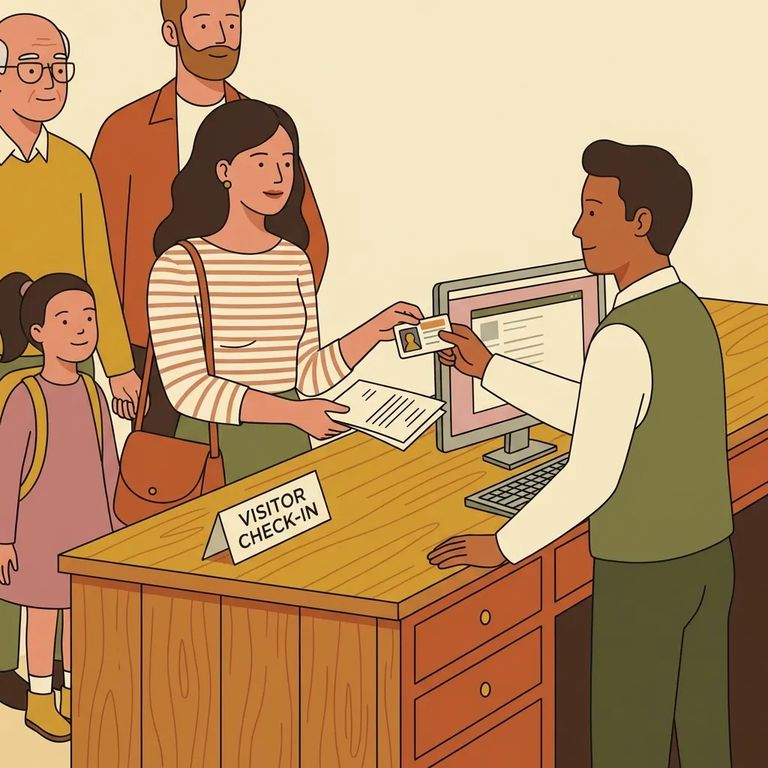
Arrive at least 10 minutes before your scheduled visit time. Check-in takes a few minutes, and getting there early means you won't feel rushed through the process.
- Complete the Prospective Visitor’s Interview (PVI), if it’s your first visit - On your first visit you’re required to fill out the PVI form, unless you already have prior approval through the electronic PVI process.
- Verify your identification - Staff will check your ID(s) as part of the entry process.
- Complete COVID screening and receive a mask - Expect a COVID-19 symptom and temperature screening at check-in, and the facility provides a surgical mask to every visitor over the age of two.
ID and Face Covering
- ✓ Bring two forms of identification if you’re an adult visitor.
- ✓ Make sure one of your IDs is a current state-issued photo ID.
Wearing a face covering? Be ready to lower it briefly for identification when entering and exiting. If you don't have a mask, the facility provides a surgical mask to every visitor over age two at check-in.
Once you're on IDOC property, assume everything connected to your visit can be checked. All persons, vehicles, and items brought onto State property are subject to search.
You'll also go through a personal search during entry. Officers at the Visitor Center conduct a body search before you're allowed in.
Warning: Visitors who are intoxicated or under the influence of alcohol or drugs will not be permitted entry.
Need to breastfeed during your visit? Let the visiting room officer know. You'll be escorted to a secure, private area and brought back afterward. Expect a pat search before entering the breastfeeding area and again before returning to the visiting room.
Visitors with disabilities can request reasonable accommodations under the ADA. Contact the facility's ADA coordinator - and give advance notice, since some requests take time to arrange.
Staff can end a visit for disruptive behavior or rule violations. For a minor issue, the Visiting Room Officer gives one warning - but any further disruption gets reported. If you receive a temporary restriction (up to six months), written notice goes to both you and the incarcerated person.
The facility's Chief Administrative Officer can also deny, suspend, or restrict visiting privileges. Reasons include security concerns, space limitations, disruptive conduct by either the visitor or incarcerated person, abuse of visiting privileges, or violations of laws or departmental rules.
Find an Inmate at Joliet Treatment Center, IL
Search for a loved one and send messages and photos in minutes.