
How First Step Act Time Credits (FTCs) Work — for families of people at USP Thomson
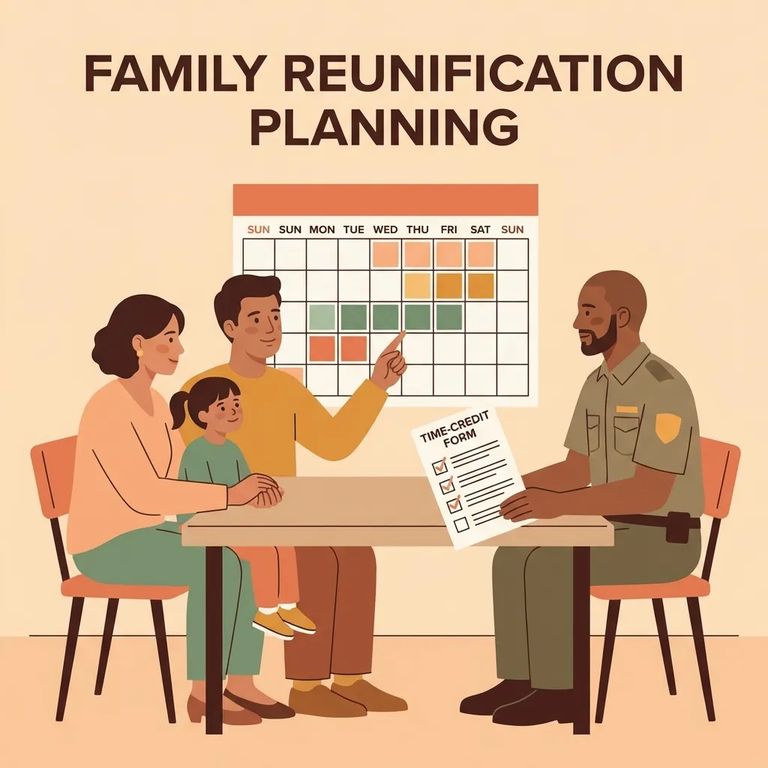
First Step Act Time Credits - usually called FTCs - let someone earn credits they can use to move into prerelease custody sooner (like home confinement) or, in some cases, shorten the supervised-release portion of their sentence. There's one important cap: even when someone qualifies to apply FTCs toward supervised release, the maximum is 365 days.
Who Can Earn and Apply
- ✓ FTCs apply only to people convicted in Federal District Court.
- ✓ FTCs do not apply to military prisoners.
- ✓ FTCs do not apply to state boarders.
- ✓ FTCs do not apply to people convicted in DC Superior Court.
- ✓ FTCs do not apply to people with a final order of deportation.
Here's where families often get confused: earning credits and being allowed to use them are two different things. Your person might have a bank of FTCs, but the BOP only lets people apply those credits if they currently have a low or minimum recidivism risk level (PATTERN score).
FTCs accumulate based on time in "opt-in" status. At the base rate, eligible people earn 10 days of credit for every 30 days they're opted in. A higher rate kicks in after two consecutive PATTERN assessments at low or minimum risk - then they earn 15 days for every 30 days.
Reminder: Earning FTCs and applying them aren't the same. The BOP only allows people who currently score low or minimum risk to use the credits they've built up.
When FTCs are applied, they can be used toward prerelease custody (including home confinement) or - if the person is eligible - toward supervised release. If FTCs are applied toward supervised release, there’s a hard ceiling: up to 365 days can be applied that way.

- Confirm the type of conviction - FTCs apply only to people convicted in Federal District Court, and they don’t apply to military prisoners, state boarders, DC Superior Court convictions, or anyone with a final order of deportation.
- Email the BOP Reentry Services Division for general questions - You can contact RSD at FSA@BOP.GOV for general information or questions about the First Step Act guide.
- Ask for the details that control credits - Have your person check with the facility’s reentry/program side about whether they are in opt-in status (which affects earning) and what their current PATTERN risk level is (which controls whether they can apply earned FTCs).
The honest way to think about FTCs: they can help some people leave prison earlier for prerelease custody or trim time off supervised release - but only when several pieces fall into place. Not everyone qualifies based on their conviction. Credits build up through opt-in time (10 days per 30, or 15 days per 30 with two consecutive low/minimum PATTERN scores). And the BOP only lets someone apply credits if their current risk level is low or minimum. Even then, if credits go toward supervised release, the cap is 365 days.
Tip: If you’re getting mixed messages about how FTCs work, email the BOP Reentry Services Division at FSA@BOP.GOV with your general questions so you can set expectations based on current guidance.
Find an Inmate at USP Thomson
Search for a loved one and send messages and photos in minutes.