
What It's Really Like Inside Vienna Correctional Center: Inmate Survey Results Explained
Want to know what daily life actually feels like for people incarcerated at Vienna Correctional Center? Two survey datasets offer a useful window: one from an October 2018 monitoring visit and another from a COVID-era survey in April–May 2020. Here's what those numbers reveal—and how to use them to ask better questions.
These reports give you timing and scale right up front. On October 10, 2018, Vienna housed 1,103 adult male inmates. The John Howard Association (JHA) collected 495 surveys that day - 44.9% of the population. During the pandemic, JHA ran a separate system-wide COVID survey and reported Vienna-specific responses gathered between April 24 and May 20, 2020. In that window, 389 people at Vienna responded. With a facility population of 818 as of April 24, 2020, that sample represented 47.56% of the prison population.
Vienna Correctional Center is classified as a minimum-security prison. That doesn’t automatically tell you what your loved one’s day looks like, but it helps frame why the surveys focus so much on basics - safety, staff interactions, health care access, and living conditions - rather than higher-security issues like lockdown intensity or segregation practices.
The 2018 survey asked people directly about safety, respect, and whether staff follow rules consistently. The answers were mixed. Some respondents felt safe and reported respectful interactions. Others disagreed sharply about whether
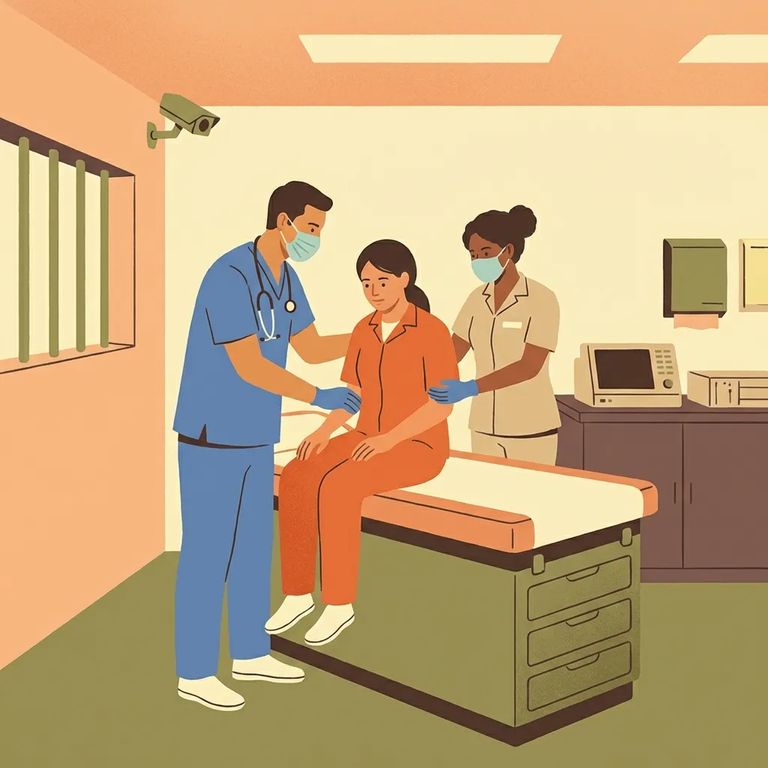
One of the most revealing health-care items in the 2018 survey wasn't about a diagnosis or wait time - it was about money. The questionnaire asked: "I avoid health care to avoid $5 co-pay." That single question can't tell you everything about medical care, but it flags a real barrier. When there's a cost attached to sick call, people may delay asking for help until a problem gets worse.
Questions to ask your loved one: “Have you ever put off sick call because of the $5 co-pay?” “How often are you paying co-pays, and for what kinds of issues?” “If you need care, how long does it usually take to be seen?”
The 2018 survey also covered day-to-day basics - things that sound small until you're living with them: shower access, adequate clothing, food satisfaction, and whether repairs get handled in a reasonable time. These items matter because they shape someone's mood and health week after week. When respondents report problems here, families often notice indirectly: more requests for hygiene items, more frustration about meals, or comments about broken fixtures that never seem to get fixed.
Watch for quality-of-life stressors: In 2018, the survey covered showers, clothing, food satisfaction, and repairs - common pressure points that can make everything else feel harder day to day.

By spring 2020, the context had shifted dramatically. Vienna's population dropped from 1,103 on October 10, 2018, to 818 as of April 24, 2020. The COVID-era survey collected 389 responses between April 24 and May 20, 2020 - 47.56% of the population at that point. The 2018 monitoring visit had collected 495 surveys (44.9% of the population that day). Both are large samples, but they capture two very different moments: a pre-pandemic snapshot versus a period when basic services and supplies were under serious strain.
- Track hygiene access (soap) - In the April–May 2020 COVID survey, 38.36% of respondents said they did not have enough soap to regularly wash their hands in the prior week.
- Track cleaning supplies (chemicals) - 78.40% reported receiving no cleaning chemicals from IDOC to clean their cell/sleeping area in the prior week.
- Check communication support (free phone calls) - 68.19% said they did not get at least one free phone call in the last week.
- Check video contact (free video visit) - 49.05% said they did not get a free video visit in the last week.
- Look for what stayed functional (mail) - 87.60% reported they were able to send and receive mail in the last week.
- Look at routine access (commissary schedule) - 68.45% said commissary ran on schedule as a full shop that week.
Hygiene stood out in 2020: 38.36% reported not having enough soap, and 78.40% reported getting no cleaning chemicals in the prior week. If you’re checking on someone’s wellbeing, these are high-priority questions to ask about.
Actionable Steps
- ✓ Ask your loved one to describe what “a normal week” looks like right now (showers, laundry, meals, and whether repairs actually get addressed).
- ✓ If they’re dealing with a medical issue, ask whether the $5 co-pay affects when they seek care, and whether they’ve delayed sick call because of cost.
- ✓ Use the COVID-era hygiene questions as a template: “Do you have enough soap this week?” and “Are you getting cleaning supplies for your sleeping area?”
- ✓ Keep a simple log of dates and details when problems come up (missed medical visits, lack of supplies, broken fixtures), using your loved one’s own words.
- ✓ When you speak with anyone about conditions, stick to specific, checkable facts: what happened, when it happened, and what the impact was.
- ✓ If you’re reading the JHA survey results yourself, pull the exact question wording before you bring it up - small differences in phrasing can change what a percentage really means.
When you see a percentage in these reports, read it as "out of the people who answered that survey during that specific window." The 2018 results come from October 10, 2018. The COVID survey reflects responses collected between April 24 and May 20, 2020 - often asking about "the last week." These numbers help you understand what many people reported at that time. They're not a permanent condition, and they don't guarantee your loved one's experience matches the average.
These are snapshots, not live updates. The conditions described come from a 2018 monitoring-visit survey and a COVID-era survey from April–May 2020. Day-to-day reality shifts with staffing, policy changes, and population levels. Several topics - safety, staff behavior, daily living - are drawn from the same 2018 survey source, so treat them as related signals from one dataset, not separate independent studies. Use these findings to guide what you ask and verify now, not as a guarantee of current conditions.
Find an Inmate at Vienna Corrections Center, IL
Search for a loved one and send messages and photos in minutes.